Adres
Merdivenköy Mah. Nur Sk.
Business İstanbul Sitesi A Blok No:1A
34732 Kadıköy, İstanbul


Europe's Ports Chart Course for Sustainable Growth
How Rotterdam, Hamburg, and Antwerp-Bruges are Redefining Port Capacity Through Digital Innovation and Green Technology
Europe's main ports are undergoing a dramatic metamorphosis as environmental concerns increase, and global trade volumes rise. Instead of just constructing larger terminals, they are taking a distinctly European approach, striking a balance between advanced automation and ambitious decarbonization targets, and demonstrating that efficiency and sustainability are complimentary rather than conflicting considerations.
The Capacity Crunch
Ports are being pushed over their handling capacity by growing global markets and rising consumer demand. At a moment when speed is more important than ever, operations are slowed by labor shortages, vessel bunching, customs delays, and infrastructure limits. The whole supply chain experienced operational inefficiencies in 2024 because of Red Sea disruptions and climate-related issues with the Panama Canal.
However, Europe has responded very differently than other regions. European ports are adopting a more gradual approach, one that equally emphasizes environmental stewardship and smooth integration with urban neighborhoods, in contrast to Asian ports, who have made rapid automation their main aim.
The data demonstrates tenacity: in 2024, the top 15 ports in Europe handled 76.8 million TEUs (twenty-foot equivalent units), a 5.9% increase over 2023. Four of these ports saw gains of 5-10%, while five of them saw double-digit growth. Over 3.5 billion tons of cargo are handled by European ports each year, making up over 40% of the world's container traffic.
Rotterdam: Setting the Digital Standard
With an annual volume of over 470 million tonnes, the Port of Rotterdam is the biggest in Europe and has come to represent digital innovation. Throughout its expansive facilities, the Dutch behemoth is implementing digital twins, IoT sensors, AI algorithms, and predictive analytics.
At the Maasvlakte 2 terminal, semi-autonomous cranes perform a meticulously planned dance of steel boxes while automated guided vehicles glide between stacks of containers. The true innovation, however, is hidden beneath the surface: an advanced digital platform that shows ship landing, customs clearance, and cargo readiness in real time.
According to a port operations manager, "We're not just moving containers faster," "We're creating a transparent, predictable system that benefits everyone in the supply chain."
Today, Rotterdam is connected to Singapore, Hamburg, and Antwerp by digital maritime lanes, allowing for unparalleled cross-continental cooperation. In sharp contrast to the fragmented systems of the past, this partnership, called chainPORT, unites ports from Europe and Asia to harmonize digital infrastructure.
Additionally, the port is constructing today's infrastructure for tomorrow's fuels. Gasunie, Shell, and the Rotterdam Authority are building a massive electrolyzer plant in Maasvlakte to use offshore wind energy to create green hydrogen. By supplying hydrogen to trucks, ships, and industrial facilities, the facility hopes to establish Rotterdam as a key hub in the developing hydrogen economy in Europe.
Hamburg: Where Green Meets Smart
The Port of Hamburg in Germany is adopting a different strategy, giving automation and decarbonization priority. Its SmartPORT plan, which is a holistic approach that produces remarkable results, focuses on energy efficiency, green mobility, and the integration of renewable energy.
All Hamburg's cruise and cargo terminals will have onshore power supply capabilities within two years, enabling ships to turn off their diesel generators while anchored. With an annual supply of 1,420 gigawatt-hours, the infrastructure will drastically cut emissions in this crowded metropolitan port.
In addition to installing dispersed solar panels that can produce more than 800 megawatt-hours, Hamburg is also at the forefront of drone technology for logistics management, monitoring, and inspections. These unmanned aerial vehicles can gather important operational data while monitoring the large port area more effectively than traditional patrols.
The port's plan reflects a characteristically European factor: as most large ports are closely connected to big cities, environmental performance is not only a marketing tactic but also a social necessity.
Antwerp-Bruges: The Rising Challenger
In 2024, the combined Port of Antwerp-Bruges grew by an impressive 8.1% year over year, bringing it closer to Rotterdam by less than 300 TEUs. This performance wasn't a coincidence; it was the outcome of calculated investments in sustainability and capability.
This dual approach is demonstrated by the €324.6 million Europa Terminal renewal project, which aims to reduce CO2 emissions by 50% while creating sustainable, efficient operations. The Hydrotug, the first hydrogen-powered tugboat in history, was unveiled in December 2023 with a full hydrogen bunkering system, making it the port's most striking project.
Additionally, Antwerp-Bruges has implemented D-Hive, a drone-in-a-box network that offers security monitoring over 120 square kilometers of port space. Without human assistance, these autonomous devices can launch, patrol, and return to recharge stations, significantly increasing security coverage and cutting expenses.
The Hidden Key: Hinterland Connectivity
While green technology and automation garner most of the attention, port experts are increasingly pointing to hinterland connectivity - a less glamorous factor - as being crucial to capacity optimization. In other words, if containers are unable to travel smoothly to their destinations, even the most effective port terminal turns into a bottleneck.
According to one logistics consultant, several ports use railway connectivity as a metric to assess their competitiveness. "When rail capacity maxes out, container shippers divert cargo to other ports.Good transportation connections, such as trucks, trains, and barges, improve operations and lessen traffic, especially for landlocked nations that rely on seaport access.
This realization goes against the grain. Larger, more complicated facilities are frequently outperformed by smaller ports with good rail links and efficient yard management. The lesson is that capacity optimization is about moving containers inland efficiently, not just how many you can unload.
In response, ports throughout Europe are making significant investments in intermodal links. Most of the transportation is still by road, even if EU rules encourage modal shift. However, measures like better barge facilities, specialized rail lines, and coordinated scheduling are progressively altering the balance.
Green Ports: From Aspiration to Reality
One of the most noticeable sustainability projects is shore power infrastructure. Although installation prices range from €200,000 to €6 million per berth, only 58% of EU ports currently have onshore power supply capabilities, making implementation difficult.
Rotterdam, Hamburg, and other major ports are investing more than €500 million to create more than 160 power supply stations. The problem is not only monetary; because of grid capacity constraints, certain modifications may not be implemented for five to fifteen years.
The longer-term option is the development of green hydrogen. By 2024–2026, large-scale electrolyzers should be running in several ports throughout Europe. While Scandinavian ports are constructing ammonia fuel facilities, Amsterdam is creating intercontinental corridors for the import of renewable hydrogen.
Additionally, ports are expanding their infrastructure for alternative fuels. Amsterdam is getting ready to build hydrogen facilities in 2025, Rotterdam established a methanol terminal in 2023, and several ports are looking into green corridor projects that link facilities with lower emissions targets.
Recovery and Resilience
In recent years, European ports have proven to be remarkably resilient. Despite external shocks like geopolitical tensions, climate disruptions, and continuous supply chain modifications, North America and Europe regained stability by 2024 after posting their lowest performance scores in 2022.
Rising port performance scores are correlated with persistent investment in digital technologies, round-the-clock operations, and hinterland linkages, all of which are reflected in the recovery. Now, facilities that kept up their investments during recessions are benefiting.
With 13.82 million TEUs in 2024, Rotterdam remained in first place, but Antwerp-Bruges made tremendous progress. Hamburg, Valencia, and Piraeus were among the other top performers, each carving out a place in Europe's intricate logistics system.
The European Approach: A Model for Others?
Asia's rapid automation boom contrasts with the methodical approach of European ports. This is a reflection of structural differences: European facilities are subject to tougher environmental rules and are generally more integrated with metropolitan areas. Additionally, they stress stakeholder alignment and communication, which is a lengthy process but one that garners more support.
This strategy places more emphasis on optimizing the transportation chain from door to door than on discrete terminal improvements. Coordinated scheduling with rail operators, just-in-time arrival procedures, and cooperative projects like chainPORT show a systems-thinking approach that might end up being more long-term viable.
European ports are also distinguished by their focus on efficiency enhancements and decarbonization. European ports have incorporated sustainability into their fundamental strategic planning from the start, but facilities in Asia and North America are only now starting to address environmental issues.
Looking Ahead
The global maritime industry can learn a number of lessons from the evolution of European ports. First, capacity optimization involves more than simply physical infrastructure; coordination and communication in the hinterlands are frequently more important than terminal size. Second, rather than competing with one another, automation and sustainability can complement one another. Third, even though it takes time, stakeholder alignment produces longer-lasting competitive advantages.
The European paradigm of balanced investment in technology, sustainability, and connection may prove prophetic as vessel sizes increase and environmental laws become more stringent. The ports that best integrate into extensive, sustainable logistical networks will probably be the ones that prosper in the ensuing decades, not just the largest or most automated.
The goal for Rotterdam, Hamburg, Antwerp-Bruges, and its contemporaries is not to move boxes as quickly as possible. The goal is to create port ecosystems that can effectively, sustainably, and resiliently service European industry and consumers for many generations to come.
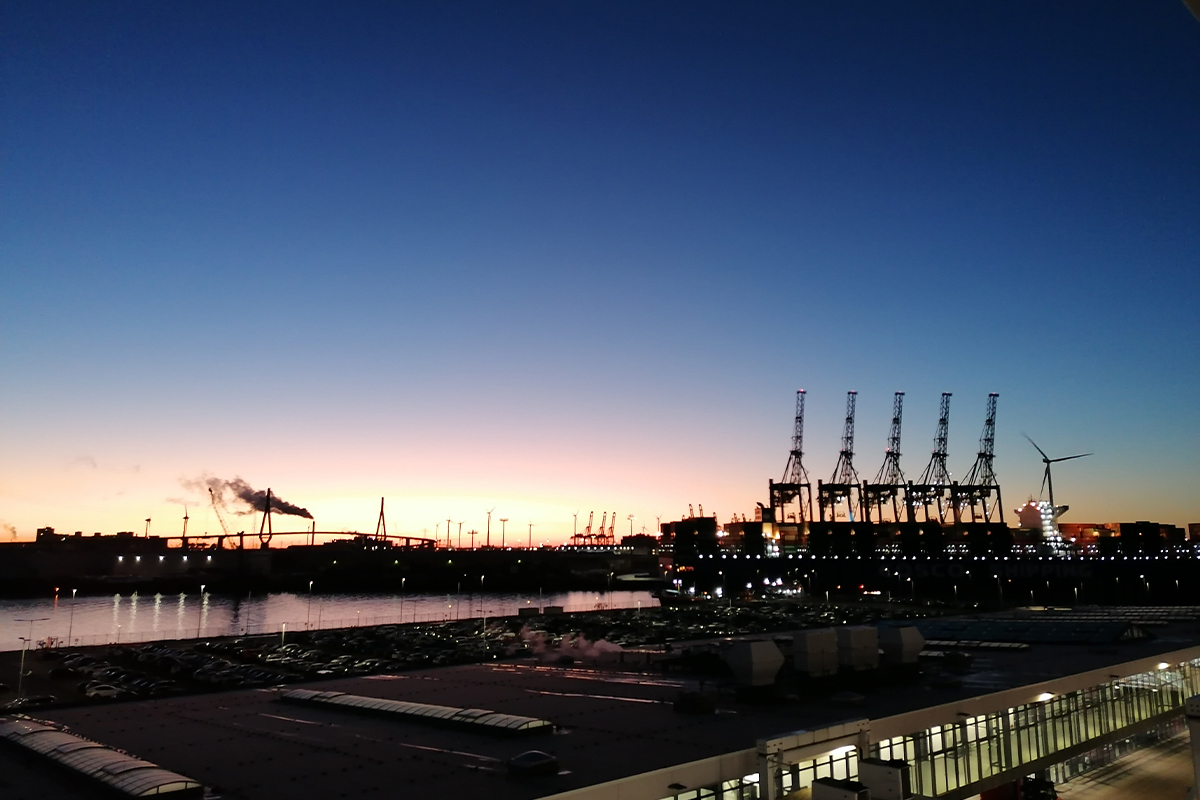
Avrupa Limanları Sürdürülebilir Büyüme İçin Yeni Bir Rota Çiziyor
Rotterdam, Hamburg ve Antwerp-Bruges Limanları Dijital İnovasyon ve Yeşil Teknolojilerle Kapasiteyi Yeniden Tanımlıyor
Avrupa’nın başlıca limanları, artan çevresel kaygılar ve büyüyen küresel ticaret hacimleriyle birlikte köklü bir dönüşüm sürecinden geçiyor. Daha büyük terminaller inşa etmek yerine, Avrupa limanları kendine özgü bir yaklaşım benimseyerek ileri otomasyon ile iddialı karbon azaltım hedefleri arasında denge kuruyor. Bu yaklaşım, verimlilik ile sürdürülebilirliğin birbirine zıt değil, aksine tamamlayıcı unsurlar olduğunu ortaya koyuyor.
Kapasite Sıkışıklığı
Küresel pazarların büyümesi ve tüketici talebinin artması, limanları kapasite sınırlarına zorluyor. İş gücü eksikliği, gemi yoğunlaşması (vessel bunching), gümrük gecikmeleri ve altyapı kısıtları operasyonları yavaşlatıyor. 2024 yılında Kızıldeniz’deki aksaklıklar ve Panama Kanalı’ndaki iklim kaynaklı sorunlar, tüm tedarik zincirinde ciddi verimsizliklere neden oldu.
Ancak Avrupa bu duruma diğer bölgelerden farklı bir yanıt verdi. Asya limanları hızlı otomasyona odaklanırken, Avrupa limanları çevresel sürdürülebilirlik ve kentsel uyumun ön planda olduğu daha dengeli bir model benimsedi.
Veriler de bu dayanıklılığı ortaya koyuyor: 2024 yılında Avrupa’nın en büyük 15 limanı toplam 76,8 milyon TEU elleçledi; bu, 2023’e göre %5,9’luk bir artış anlamına geliyor. Bu limanların dördü %5–10 arası büyüme kaydederken, beşi çift haneli artış yakaladı. Avrupa limanları yılda 3,5 milyar tonun üzerinde yük elleçleyerek küresel konteyner trafiğinin %40’ından fazlasını oluşturuyor.
Rotterdam: Dijital Standartları Belirleyen Liman
Yıllık 470 milyon tonun üzerindeki hacmiyle Avrupa’nın en büyük limanı olan Rotterdam, dijital dönüşümün sembolü haline gelmiş durumda. Liman genelinde dijital ikizler, IoT sensörleri, yapay zekâ algoritmaları ve öngörücü analitik sistemler aktif olarak kullanılıyor.
Maasvlakte 2 terminalinde yarı otonom vinçler, konteynerleri kusursuz bir koordinasyonla hareket ettirirken, otomatik yönlendirmeli araçlar (AGV) konteyner sahaları arasında kesintisiz çalışıyor. Ancak asıl yenilik, gemi yanaşma, gümrük işlemleri ve yük hazırlık süreçlerinin gerçek zamanlı izlenebildiği gelişmiş dijital platformda yatıyor.
Bir liman operasyon yöneticisinin ifadesiyle: “Artık sadece konteynerleri daha hızlı taşımıyoruz; tüm tedarik zinciri için şeffaf ve öngörülebilir bir sistem oluşturuyoruz.”
Rotterdam ayrıca Singapur, Hamburg ve Antwerp limanlarıyla dijital deniz koridorları üzerinden entegre çalışıyor. chainPORT adı verilen bu iş birliği, Avrupa ve Asya limanları arasında dijital altyapının uyumlaştırılmasını sağlıyor.
Enerji dönüşümü tarafında ise Rotterdam, yeşil hidrojen ekonomisinin merkezlerinden biri olmayı hedefliyor. Gasunie, Shell ve Rotterdam Liman Otoritesi tarafından Maasvlakte’de inşa edilen büyük ölçekli elektroliz tesisi, offshore rüzgâr enerjisiyle hidrojen üretimini mümkün kılacak.
Hamburg: Yeşil ve Akıllı Liman Modeli
Almanya’daki Hamburg Limanı, otomasyon ile karbon azaltımını birlikte ele alan bir strateji izliyor. SmartPORT girişimi kapsamında enerji verimliliği, yeşil mobilite ve yenilenebilir enerji entegrasyonu ön planda.
İki yıl içinde tüm kruvaziyer ve yük terminallerinde kıyı elektrifikasyonu (shore power) devreye alınacak. Bu sayede gemiler limanda demirliyken dizel jeneratörlerini kapatabilecek. Yıllık 1.420 GWh kapasiteyle bu sistem, özellikle şehir merkezine yakın bölgelerde emisyonları ciddi şekilde azaltacak.
Hamburg ayrıca 800 MWh’den fazla üretim kapasitesine sahip güneş panelleri kurarken, lojistik operasyonlar ve güvenlik için drone teknolojilerini aktif olarak kullanıyor.
Bu yaklaşım, Avrupa limanlarının karakteristik bir özelliğini yansıtıyor: Limanlar şehirlerle iç içe olduğundan, çevresel performans sadece bir tercih değil, sosyal bir zorunluluk.
Antwerp-Bruges: Yükselen Rekabet Gücü
2024 yılında Antwerp-Bruges Limanı %8,1 büyüme kaydederek Rotterdam ile arasındaki farkı ciddi şekilde kapattı. Bu başarı, planlı sürdürülebilirlik yatırımlarının bir sonucu.
€324,6 milyonluk Europa Terminal yenileme projesi, hem operasyonel verimliliği artırmayı hem de CO₂ emisyonlarını %50 azaltmayı hedefliyor. Ayrıca dünyanın ilk hidrojen yakıtlı römorkörü olan Hydrotug, limanın dikkat çeken projeleri arasında yer alıyor.
D-Hive drone ağı ise 120 km²’lik liman alanında otonom güvenlik ve izleme sağlıyor.
Gizli Anahtar: Hinterland Bağlantıları
Otomasyon ve yeşil teknolojiler ön planda olsa da, uzmanlar liman kapasitesinin asıl belirleyicisinin hinterland bağlantıları olduğunu vurguluyor.
Bir lojistik danışmanına göre:
“Demiryolu kapasitesi dolduğunda, yük başka limanlara kayar.”
Yani mesele sadece limana gelen yük değil; yükün hinterlanda ne kadar hızlı ve verimli taşındığıdır.
Yeşil Limanlar: Hedeften Gerçeğe
Kıyı elektrifikasyonu yatırımları hız kazanırken, AB limanlarının sadece %58’inde bu sistem bulunuyor. Kurulum maliyetleri 200.000 € ile 6 milyon € arasında değişiyor.
Rotterdam ve Hamburg gibi limanlar 500 milyon €’nun üzerinde yatırım yaparak 160’tan fazla shore power noktası kurmayı hedefliyor.
Uzun vadede ise çözüm yeşil hidrojen. 2024–2026 arasında birçok Avrupa limanında büyük ölçekli elektroliz tesislerinin devreye alınması bekleniyor.
Dayanıklılık ve Toparlanma
Avrupa limanları son yıllarda jeopolitik riskler ve iklim krizine rağmen yüksek dayanıklılık gösterdi. 2024 itibarıyla performans göstergeleri yeniden yükselişe geçti.
Rotterdam 13,82 milyon TEU ile liderliğini sürdürürken, Antwerp-Bruges hızlı bir yükseliş kaydetti. Hamburg, Valencia ve Pire diğer güçlü oyuncular arasında yer aldı.
Avrupa Yaklaşımı: Küresel Bir Model mi?
Avrupa limanları, Asya’nın hızlı otomasyon modelinden farklı olarak daha dengeli bir yaklaşım benimsiyor. Bu model:
• çevresel regülasyonlara uyum
• şehirlerle entegrasyon
• paydaşlar arası koordinasyon üzerine kurulu.
Amaç sadece terminal verimliliği değil, uçtan uca lojistik zincir optimizasyonu.
Geleceğe Bakış
Avrupa limanlarının dönüşümü şu dersleri ortaya koyuyor:
• Kapasite sadece fiziksel büyüme değil, koordinasyon meselesidir
• Otomasyon ve sürdürülebilirlik birlikte ilerleyebilir
• Paydaş uyumu uzun vadeli rekabet avantajı sağlar
Rotterdam, Hamburg ve Antwerp-Bruges için hedef artık sadece daha hızlı konteyner taşımak değil; sürdürülebilir, verimli ve dirençli liman ekosistemleri kurmak.
Merdivenköy Mah. Nur Sk.
Business İstanbul Sitesi A Blok No:1A
34732 Kadıköy, İstanbul